Thanks to Jane Hart – an interactive graphic that shows how quickly data is generated on the web.

Workplace Learning in the Digital Age
Dr. Donna Murdoch
Thanks to Jane Hart – an interactive graphic that shows how quickly data is generated on the web.
Many can identify with this – the way plans are made/not made and broken now that we do everything with phones. From Mashable. “The video shows how easily one plan can bleed into another, and identifies three kinds of flaky texters: latecomers (who are perpetually “10 minutes away”), no-shows (who ultimately want to reschedule) and optimizers (who try to wheedle information about an event from the person suggesting it, to determine whether it’s worth their precious free time).”

From Open Culture – an article about a new feature on NPR’s blog. There are so many famous commencement speeches….good opportunity to take a look and see them all in one place instead of searching on You Tube. “On NPR’s blog, they’ve highlighted some of the key takeaways from the long history of commencement speeches: Be kind, dream, remember history, embrace failure, don’t give up, etc. Right above, you can see NPR’s new animation featuring former Clinton and Obama speechwriter Jon Lovett at Pitzer College’s commencement.”
via NPR Launches Database of Best Commencement Speeches Ever – | Open Culture.

For people who haven’t been fortunate enough to try a 3D printer, who just can’t grasp what it will do, or who just want to see some cool ideas, TNW shares some really interesting things that can be printed with a 3D printer. “Here are 10 cool things already being printed in 3D”
via New dimensions: 10 amazing things being printed in 3D – The Next Web.

The Wayback Machine has always been invaluable. That site you remember seeing years ago? The way Google looked in 2008? Traveling through Internet History? The Museum of all things Internet has always been online. “The Internet Archive today announced a massive milestone for its Wayback Machine: 400 billion indexed webpages. The data encompasses the Web as it looked anytime from late 1996 up until a few hours ago.” From The Next Web.
via The Wayback Machine Passes 400 Billion Indexed Webpages.
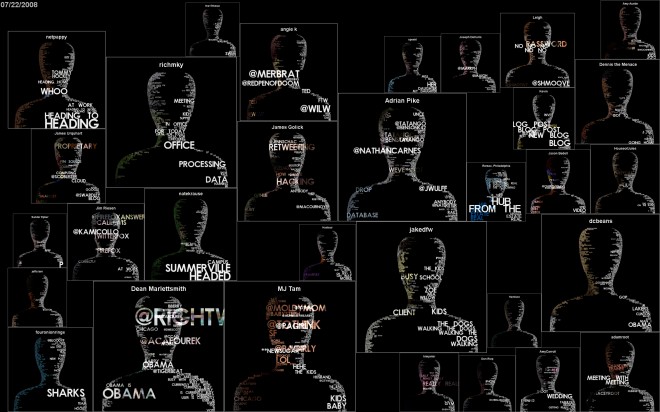
There has always been ongoing discussion about whether or not real names should be used in online discussions. danah boyd and others, including the author of this article Judith Donath, have expressed the positive effects of using different identities in different spaces. Certainly there are cases where avatars, or pseudonyms, are abused and can bring out the worst in people. Then again, with the permanence of online discussion, should every place we ever participate online become a part of our online identity? Donath uses the example of personal health issues, and it is a good one. For those who insist on real names, she says, “Instead, we should focus on how to design for keeping online discourse civil and constructive. And this involves supporting the middle ground, pseudonymous identities, which can provide both accountability and privacy.”
via We Need Online Alter Egos Now More Than Ever | Opinion | WIRED.

There was an article earlier this week in the Atlantic about how Twitter was in its twilight. I couldn’t help but think they don’t really understand it. This article from Slate articulates why I felt that way. “Twitter is not a social network. Not primarily, anyway. It’s better described as a social media platform, with the emphasis on “media platform.” And media platforms should not be judged by the same metrics as social networks.”
via Twitter is not dying. It’s on the cusp of getting much bigger..

The title of this article says it all. Who needs to ever leave their laptop or tablet now? From VentureBeat. “Hulu is teaming up with Pizza Hut on a new type of in-context advertising that’ll let you order food during a commercial break — right from the screen you’re watching.”

Great post on GigaOm about the days when everyone didn’t have a blog. The post refers to it as the “Indie Web.”
A post by long-time tech blogger Dan Gillmor about the decline of the “indie web” got me thinking about the old days of the blogosphere, and how powerful the unedited voice of a single passionate blogger can be. Have we gained as much as we’ve lost?

I put these sites in my Reader, and am really enjoying them all. But it’s hard to read so much analysis of the same thing. GigaOm is coining the phrase “Explanatory Journalism” which works well. We’ll see how they all grow…. ” With the launch of The Upshot from the New York Times, there are now three major sites going after the “explanatory journalism” market. Each has its own unique flavor, but is the market for that kind of content really large enough to support that many sites?”
 Workplace Learning in the Digital Age