How Twitter Could Sell Movie Tickets

Under a groundbreaking partnership between Twitter and Comcast, announced Wednesday, Fandango will be able to sell tickets directly from the social media platform.

The details on this new venture remain unclear for now — it’s early days as they like to say — but the potential is limitless. Can you imagine a movie studio or movie star using Twitter to sell tickets for a movie they are working on by tweeting about it?

via How Twitter Could Make Movie Studios a Boatload of Cash – TheWrap.

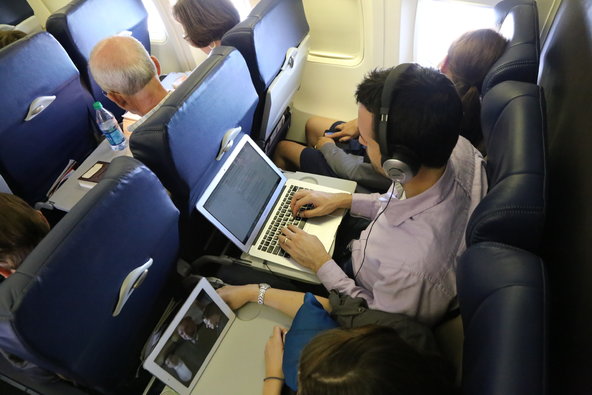
Disruptions: How the F.A.A., Finally, Caught Up to an Always-On Society

“If the F.A.A. doesn’t come out with a reasonably prompt timeline in the next 60 to 90 days, then I will go full bore to get this done legislatively,” she said.

With a report in hand that says devices cannot harm a plane, she said, it will be easy to push through legislation requiring the change.

via Disruptions: How the F.A.A., Finally, Caught Up to an Always-On Society – NYTimes.com.

Nokia Wants to Use Lightning to Charge Your Phone


In order to create a \”lightning bolt\” for their test, the team first generated an alternating current through a transformer. They then channeled that current between a gap that was a little under an inch thick, surging 200,000 volts — well within the average strength of a typical lightning strike — in the form of a bolt of electricity. The signal was then transferred into another controlling transformer, where it was able to charge the battery of a Nokia Lumia 925.

via Nokia Wants to Use Lightning to Charge Your Phone [VIDEO].

Google’s Next Big Search: How And Why We Age

Google’s newest project involves a subject that affects most people sooner or later: The company has announced the formation of a spinoff, Calico, that will focus on finding solutions for issues surrounding aging and illness. Although details are few, it’s expected that Calico will take advantage of Google’s massive databases to provide new insights into, among other things, extending human lifespans. It will be led by Arthur Levinson, who used to head up Genentech, a corporation considered by many to be a pioneer in the biotechnology industry.

via Google’s Next Big Search: How And Why We Age | IdeaFeed | Big Think.

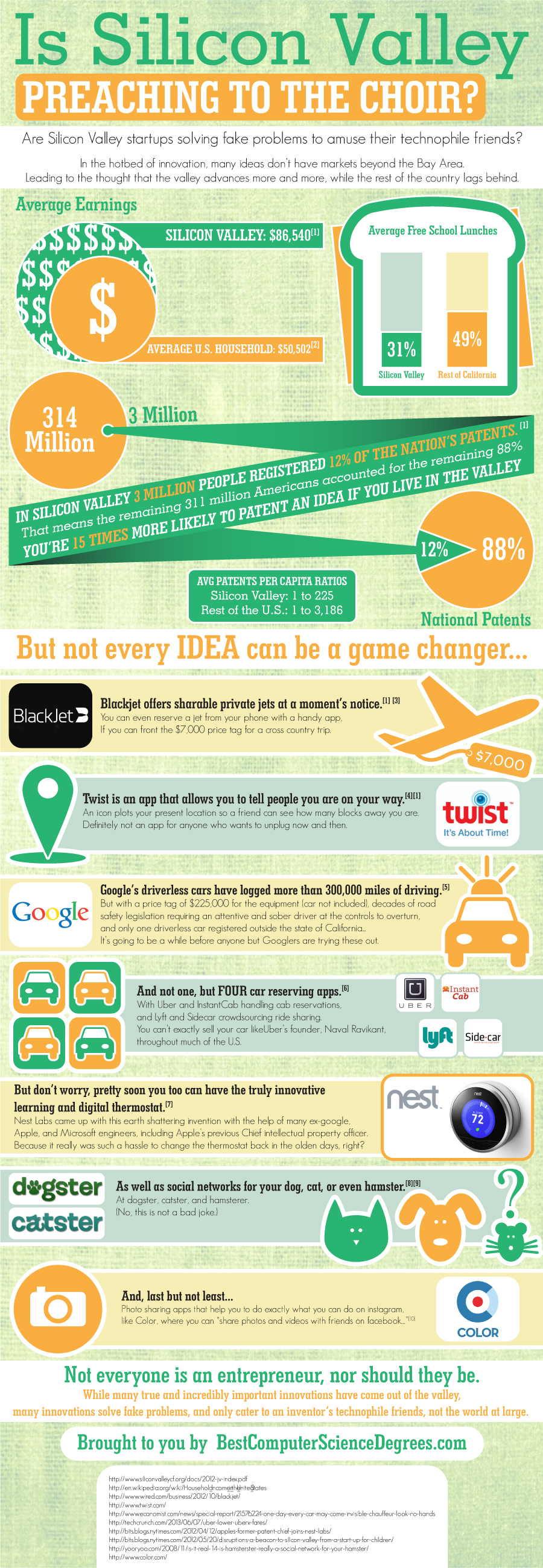
Why startups should look to Google, not Facebook, as a role model

Technology is advancing so rapidly that most of today’s industry leaders will slip into oblivion by the end of this decade. The only companies that will survive are those that invest heavily in research — and take big risks. Nothing illustrates the difference between companies better than Facebook and Google. Google is exploring uncharted territory and staking its claims to the next trillion-dollar market opportunities, while Facebook is mired in the past and squeezing every penny it can out of its customers. Unless it happens to luck out by buying the right company, it seems to me, Facebook is doomed.

via Why startups should look to Google, not Facebook, as a role model | VentureBeat.

Meet the Drone That’s “Guiding” New Students Around MIT This Fall


Navigating a new campus is all part of the nostalgic movie montage that is freshman year of college. The changing leaves! The quaint Gothic architecture! The… drone tour guide? That’s the concept behind Skycall, a playful prototype that’s designed to help visiting Harvard students find their way around MIT’s notoriously confusing campus—which has been called “one of mankind’s most difficult and disorienting labyrinths.”

via Meet the Drone That’s “Guiding” New Students Around MIT This Fall.

Why a New Golden Age for UI Design Is Around the Corner

From Wired –

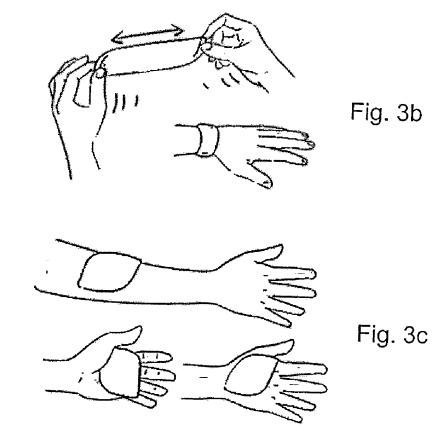
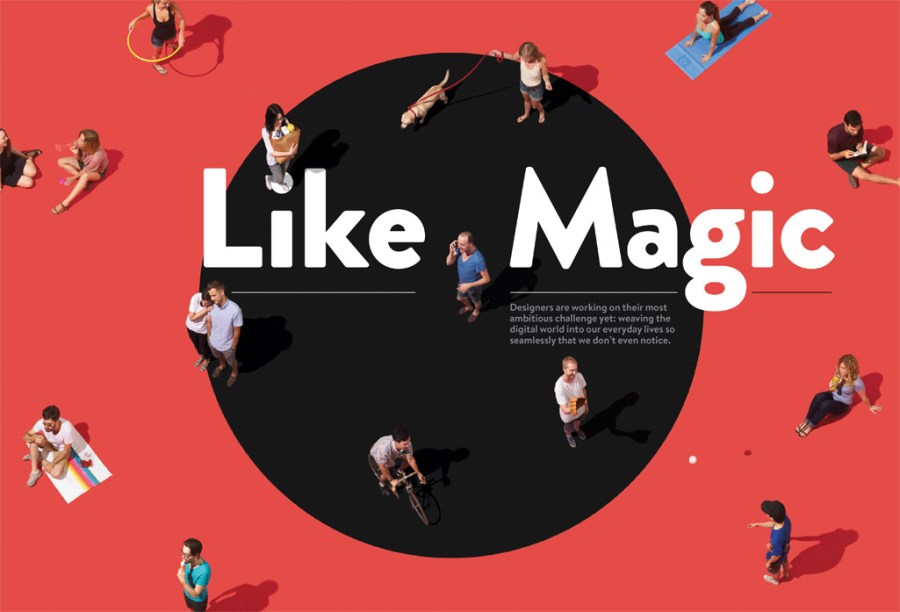
Over the past four years, the Walt Disney Company has been engaged in a secretive effort to redesign the Disney World experience. It’ll go like this: You buy your ticket online and plan all the details of your visit. Then you’ll get a wristband in the mail, which will be a passport to the experience that you’ve curated. Snug around your wrist, the so-called MagicBand will use radio frequency to communicate with sensors around the park, all orchestrated by software that effectively turns Disney World into a computer interface. You can enter the park by holding your hand up to a kiosk; you can arrive at shows with 30 seconds to spare, having already reserved your seats; you can jump onto rides you’ve selected at preselected times without waiting in long lines; you can buy anything you want with a wave. An It’s a Small World character could call you by name and wish you happy birthday. So could Mickey, who can also greet you at a preselected meeting time. This is all in the service of fun, of course, but it is also a glimpse of the future: an integrated experience, a smooth hybrid of real-world and digital interactions.”

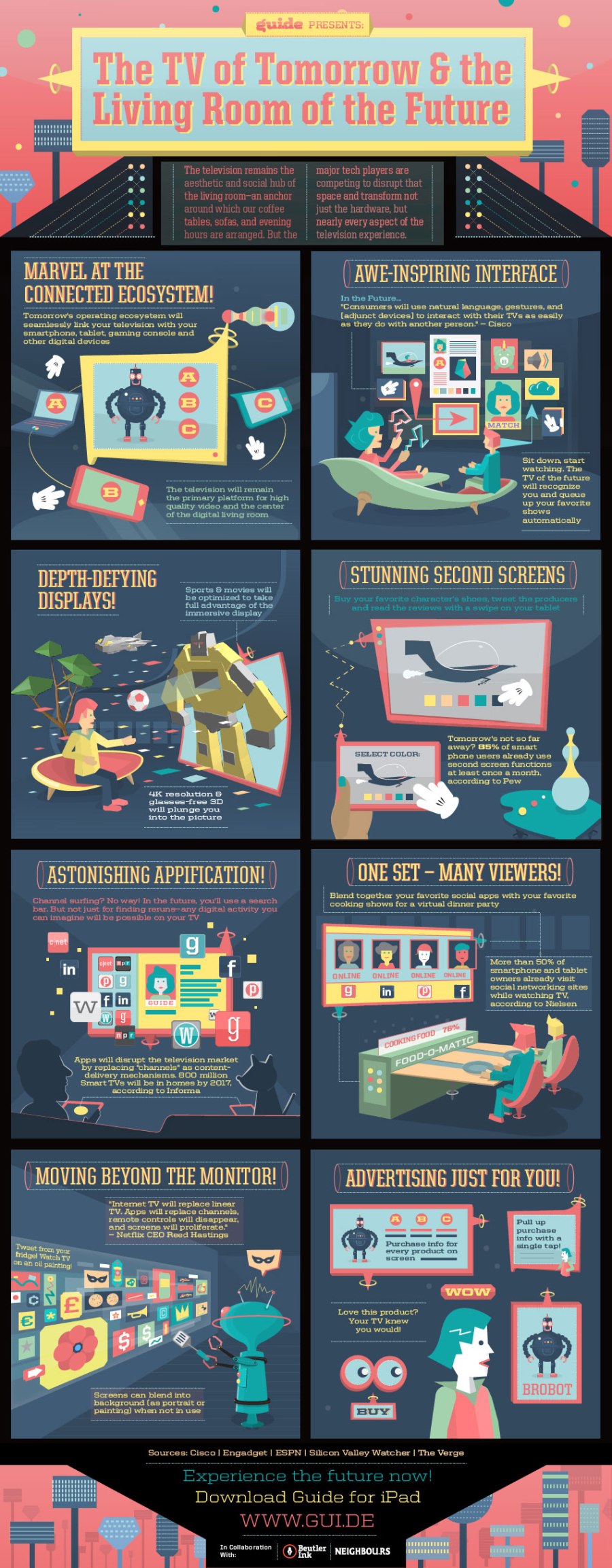
My favorite line – WE ARE CONSTANTLY ADDING NEW GADGETS.
EVEN AS THEY HAVE GOTTEN SIMPLER INDIVIDUALLY, THE CUMULATIVE COMPLEXITY OF ALL OF THEM TOGETHER IS INCREASING.