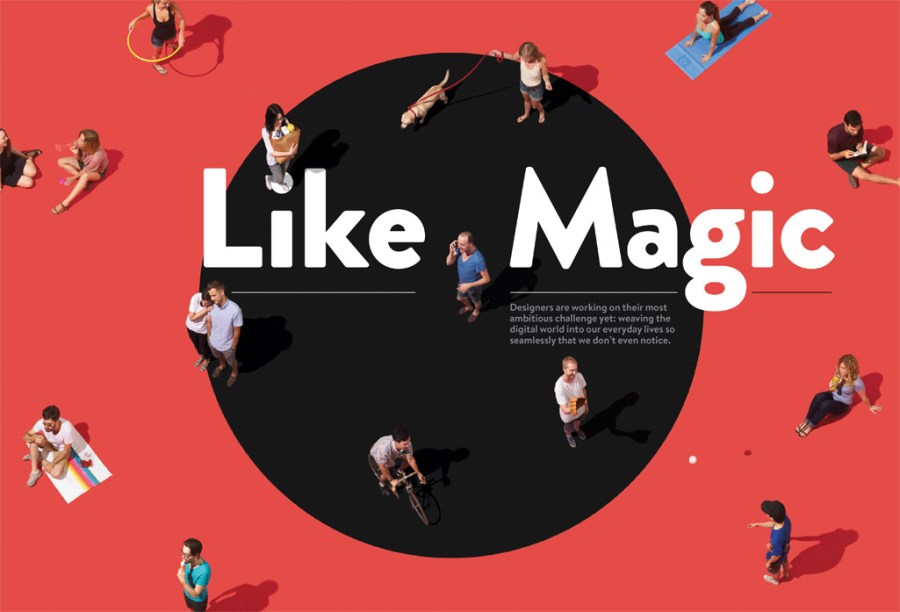
Why a New Golden Age for UI Design Is Around the Corner

From Wired –

Over the past four years, the Walt Disney Company has been engaged in a secretive effort to redesign the Disney World experience. It’ll go like this: You buy your ticket online and plan all the details of your visit. Then you’ll get a wristband in the mail, which will be a passport to the experience that you’ve curated. Snug around your wrist, the so-called MagicBand will use radio frequency to communicate with sensors around the park, all orchestrated by software that effectively turns Disney World into a computer interface. You can enter the park by holding your hand up to a kiosk; you can arrive at shows with 30 seconds to spare, having already reserved your seats; you can jump onto rides you’ve selected at preselected times without waiting in long lines; you can buy anything you want with a wave. An It’s a Small World character could call you by name and wish you happy birthday. So could Mickey, who can also greet you at a preselected meeting time. This is all in the service of fun, of course, but it is also a glimpse of the future: an integrated experience, a smooth hybrid of real-world and digital interactions.”

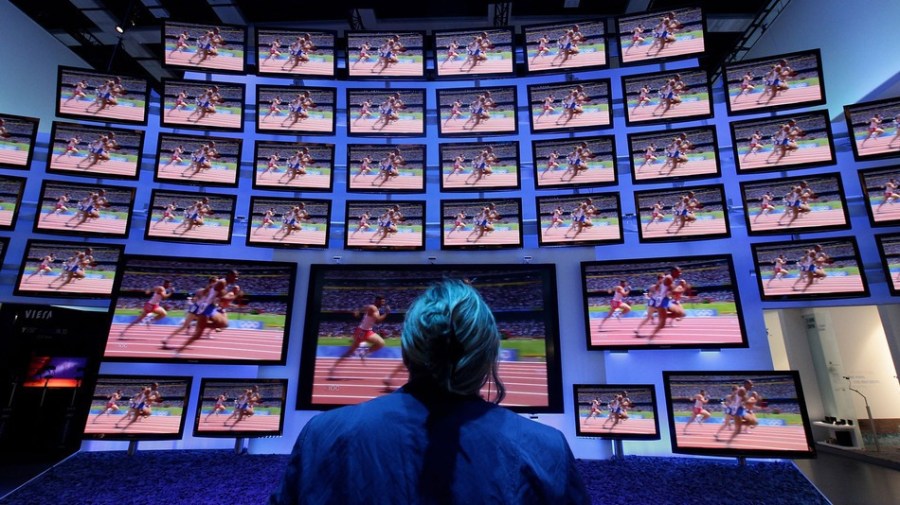
My favorite line – WE ARE CONSTANTLY ADDING NEW GADGETS.
EVEN AS THEY HAVE GOTTEN SIMPLER INDIVIDUALLY, THE CUMULATIVE COMPLEXITY OF ALL OF THEM TOGETHER IS INCREASING.
 

Survey: far fewer developers are prioritizing smartphone apps over tablet apps


Interesting survey mentioned on GigaOm, showing the same level of interest in making smartphone apps as they do in making tablet apps.   Smartphones are the extension everyone has to their body, but tablets seem to be the place where there’s more room for growth.  This piece shows us the difference (which, no surprise, is different when applied to development of Android apps.)

5 Years On, the App Store Has Forever Changed the Face of Software


Wired has an interesting article that makes us think about what we now take for granted – apps.  “It…changed the way we think about software distribution and valuation.”  It really did.  It is hard to imagine having a Blackberry just a few years ago, and using the web with text based menus.  When we went from ASCII based text on a screen at 300 bps to color pictures on Compuserve and America Online, it was amazing.  We’ve done the same thing with smartphones, but it is even more meaningful.  They become a part of us – an extension of our lives and our intelligence.

The Wired article about apps, the ecosystem, where we’ve been, and where we’re going is here.

Upgrading to iOS 7 means learning a new language

GigaOm addresses a concern I’ve had since the announcement (and technical description of) the new iOS7.  The fastest growing group, and most recent purchases of iPhone 5 are the “late majority” on Rogers Diffusion of Innovations curve – and are not as technologically savvy as earlier adopters.   iOS7 will only run on iPhone 5 and beyond.  Upgrading to the new OS will be too much change for most.  Hopefully they will realize that keeping their existing OS is an option….