A Step-by-Step Guide to Hosting or Joining a Twitter Chat

Twitter chats, or using the hashtags for Twitter chats, is an invaluable resource for finding what you’re looking for in what can seem to be a disorienting environment.  New Twitter users often don’t know where to start, and the stream of comments seems overwhelming.  Finding a chat that suits interests is one way to find direction.  This is from TNW.  “Whether you’re a Twitter pro or newer to the network, whether you plan to host your own chat or if you look forward to participating in others, a bit of advance preparation could help. Here’s what we’ve discovered so far to help you make the most of Twitter chats.”

via A Step-by-Step Guide to Hosting or Joining a Twitter Chat.
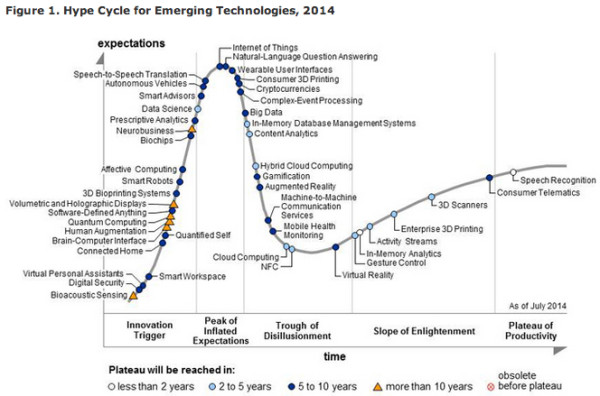
Charting the ‘Hype Cycle’: Internet of Things, Wearables, 3D Printing at the ‘peak of inflated expectations’

Terrific graphic from Geekwire.  Looks like we are at the peak of the Internet of Things – as we are waiting for the iWatch (??)  “The Hype Cycle for Emerging Technologies is the broadest aggregate Gartner Hype Cycle, featuring technologies that are the focus of attention because of particularly high levels of hype, or those that Gartner believes have the potential for significant impact,”

via Charting the ‘Hype Cycle’: Internet of Things, Wearables, 3D Printing at the ‘peak of inflated expectations’ – GeekWire.

Being a Better Online Reader

Authors, instructors who provide digital text, and the “cut and paste” chart mentality of medical students all point to a new era of reader – the online reader.  There are many who claim that when digital information is the source, readers are unprepared to address basic problems.  In other words, reading e-text is not as qualitative as traditional text.  This article is from The New Yorker.  “While the backgrounds of the writers varied, a theme began to emerge: the more reading moved online, the less students seemed to understand.”

via Being a Better Online Reader – The New Yorker.

On the Internet of Things, your body is the next thing to be networked

The Internet of Things is likely to be bigger than any device – iPad, iPhone – because there is nothing it won’t apply to.  This article discusses one particular wristband and its capabilities, but we are at the very beginning of what will soon be very common.  Our biometric data, passwords, authentications, learning competencies, the lights we want on in our homes and the times the heater should turn on.  It is all going to change dramatically, and soon.  “At a recent demonstration in Toronto, a biomedical researcher slipped on a wristband and waved it at a laptop, watching as the computer recognized him and unlocked itself. Then he handed the same wristband to his research partner, who put it on and tried the same thing—but this time, the laptop didn’t respond.”

via On the Internet of Things, your body is the next thing to be networked.

MIT Spin-Out Luminoso – Analyzes Social Media Conversations Across Languages

This is amazing technology in every way.  Crowdsourcing opinion and analyzing it regardless of language could have unlimited application.  “The company says it can cull through millions of communications collected from social networks and websites by its customers, identifying shifting sentiment, picking up subtext and translating slang. And the text analysis technology works in English, Portuguese, Spanish, French, Italian, German, Chinese and Japanese.”

via MIT Spin-Out Luminoso Raises $6.5 Million | Re/code.

How to learn to play piano with a little help from your iPad

Who would have thought there would come a day where you could really learn to play an instrument without an instructor.  There’ve been YouTube videos and other ways to learn online, but this is a hands on method that looks promising.  From GigaOm.  “There are aspects about learning to play piano where the iPad can help, and there are others where it can hurt. The following will look at both sides and hopefully make learning a bit easier.”

via How to learn to play piano with a little help from your iPad — Tech News and Analysis.

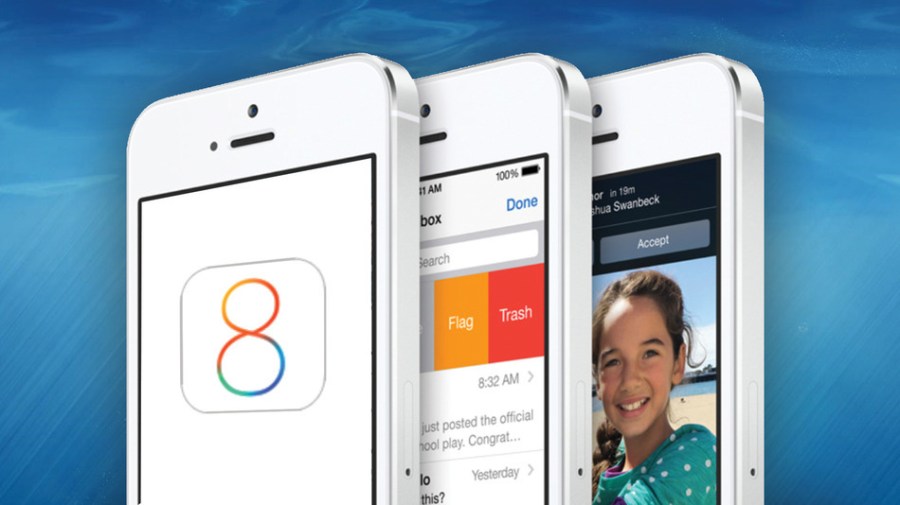
The 18 Most Important Features in iOS 8

I missed watching the stream of the conference, and at first it didn’t seem like anything terrific was announced.  The more I read, the more I am excited for some of the new functionality with both Yosemite and iOS8.   From Mashable.   “This year’s conference has had its share of surprises, and it’s little wonder devs are salivating: Apple is allowing more flexibility about what developers can grow within its walled garden. For the first time, third-party onscreen keyboards will be welcomed in iOS 8, widgets are coming to the notification center, and media apps will have greater access to the device’s camera. Apple even debuted its own programming language, Swift, which got some of the loudest cheers during Monday’s keynote.”

via The 18 Most Important Features in iOS 8.

How the Internet of Things Will Change Business

Ubiquitous technology is here, and it is not confined to computers and smartphones.  Prices of radio chips are falling, and its getting possible and affordable to connect things in every day life.  Sewer pipes, trash cans, HVAC.  Has it gone too far, or are we just beginning?  MIT Technology review sees both sides of the emergence of everyday and workplace Internet of Things.  “The technology industry is preparing for the Internet of things, a type of computing characterized by small, often dumb, usually unseen computers attached to objects. These devices sense and transmit data about the environment or offer new means of controlling it.”

via How the Internet of Things Will Change Business | MIT Technology Review.

How Smartphones Will Wreck Your Weekend Plans

Many can identify with this – the way plans are made/not made and broken now that we do everything with phones.  From Mashable.  “The video shows how easily one plan can bleed into another, and identifies three kinds of flaky texters: latecomers (who are perpetually “10 minutes away”), no-shows (who ultimately want to reschedule) and optimizers (who try to wheedle information about an event from the person suggesting it, to determine whether it’s worth their precious free time).”

via How Smartphones Will Wreck Your Weekend Plans.

The Wayback Machine Passes 400 Billion Indexed Webpages

The Wayback Machine has always been invaluable.  That site you remember seeing years ago?  The way Google looked in 2008?  Traveling through Internet History?  The Museum of all things Internet has always been online.  “The Internet Archive today announced a massive milestone for its Wayback Machine: 400 billion indexed webpages. The data encompasses the Web as it looked anytime from late 1996 up until a few hours ago.”  From The Next Web.

via The Wayback Machine Passes 400 Billion Indexed Webpages.