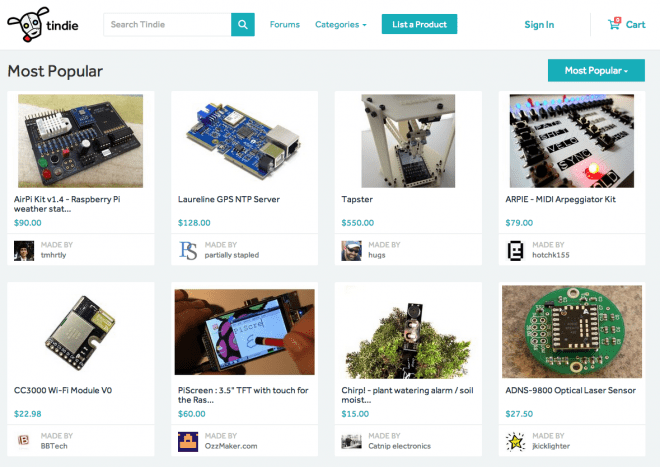
I’m not sure why Tindie is being compared to Kickstarter, because it is a marketplace and not a place to fund other projects. Regardless, what a fantastic idea for techie makers. “The tech cognescenti love talking about Kickstarter as a place for bootstrapping hardware projects. But the less-glamorous Tindie could prove just as important to the evolution of hardware design. Where Kickstarter is all about funding slick and shiny products that haven’t been built yet, Tindie is a straightforward marketplace for cruder devices that already exist, devices often built in small batches with limited amounts of capital. The result is a community of indie hardware makers who can feed off each other, a place that can help bootstrap a much wider revolution in hardware design.” From Wired.
Author: Dr. Donna Murdoch
There was an article earlier this week in the Atlantic about how Twitter was in its twilight. I couldn’t help but think they don’t really understand it. This article from Slate articulates why I felt that way. “Twitter is not a social network. Not primarily, anyway. It’s better described as a social media platform, with the emphasis on “media platform.” And media platforms should not be judged by the same metrics as social networks.”
via Twitter is not dying. It’s on the cusp of getting much bigger..
Big task, but there are plenty of abandoned pay phones. This is a great use of the the kiosks. “Free public WiFi has been available in spots throughout NYC, but now the mayor’s office is looking to cover all of its five boroughs with connectivity. In a press release today, the city’s Department of Information Technology and Telecommunications (DoITT) issued a request for proposals focused on “the creation of a robust, citywide network of internet hotspots.” The project looks to transform aging payphone kiosks into around 10,000 “communication points” across the cityscape, funded by advertising.” From Engadget.
via New York City looks to blanket the five boroughs with free WiFi thanks to next-gen payphones.
The title of this article says it all. Who needs to ever leave their laptop or tablet now? From VentureBeat. “Hulu is teaming up with Pizza Hut on a new type of in-context advertising that’ll let you order food during a commercial break — right from the screen you’re watching.”
I’ve been fascinated with new methods of electronic payments. There are lots of new offerings, providing ways to use mobile devices and key fobs. I see using them in a rush – at convenience stores, coffee shops, restaurants…but I never imagined using them in a shopping mall. That’s probably because I don’t go to shopping malls anymore. Clearly I’m not the only one. This article from TechCrunch… ” Once a key differentiator, mobile payments are fast becoming a commodity and are widely used by retailers. Yankee Group found that 61 percent of large merchants already use a mobile checkout or plan to in 2014. We are seeing the major payments players recognize this, realizing that they can’t bank on razor-thin profit margins from swiping fees alone.”
via Why Payment Innovation Is Not Enough For Retail | TechCrunch.
Community initiatives, hackathons, and civic development workshops can be really transformative. This project in Queens is just one example. “That situation led the non-profit Coalition for Queens to start Access Code, a unique training program that teaches people from the Queens community to code iOS apps, while receiving mentorship and guidance on career development and entrepreneurship from notable figures from the New York startup scene. Six months after the first Access Code class of 21 students completed the 18 week course, the 15 graduates who accepted job offers have seen their income rise from under $15,000 to an average of $72,190; the other six students are either still in college or have chosen to launch their own startups. And the class as a whole is commendably diverse in an industry that has been struggling to attract women and minorities: it’s 50 percent women, 50 percent underrepresented minorities, and 40 percent immigrants.” From Vox.
Great post on GigaOm about the days when everyone didn’t have a blog. The post refers to it as the “Indie Web.”
A post by long-time tech blogger Dan Gillmor about the decline of the “indie web” got me thinking about the old days of the blogosphere, and how powerful the unedited voice of a single passionate blogger can be. Have we gained as much as we’ve lost?
I put these sites in my Reader, and am really enjoying them all. But it’s hard to read so much analysis of the same thing. GigaOm is coining the phrase “Explanatory Journalism” which works well. We’ll see how they all grow…. ” With the launch of The Upshot from the New York Times, there are now three major sites going after the “explanatory journalism” market. Each has its own unique flavor, but is the market for that kind of content really large enough to support that many sites?”
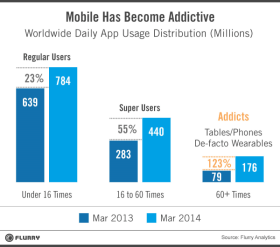
These numbers are amazing. “The number of people who launch apps more than 60 times per day on phones or tablets doubled in the past year.” From Time magazine.
via Here’s Proof You’re More Addicted to Your Phone (and Tablet) Than Ever | TIME.com.
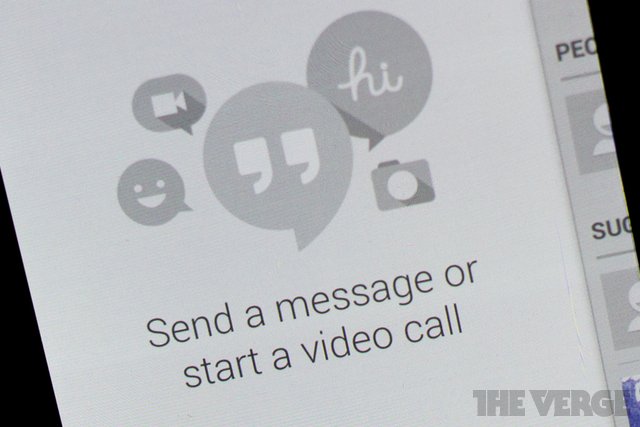
Finally integrated – this will be nice to have. “Google is crossing off a major complaint about Hangouts this week: the messaging app will finally merge your SMS and Hangouts conversations. Users can pick between Hangouts and SMS when sending a given message, but that’s it. There’s no option to use Hangouts with SMS as a fallback option, which is the approach Apple takes with iMessage.”
via Google finally combines text and chat conversations in Hangouts | The Verge.