Technology conundrum: How to help seniors age in place without creeping them out

Fantastic article about applications for IoT with the aging population.  GigaOm really gets it right.

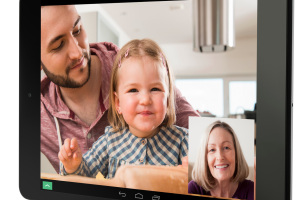
“Aging in place is a killer application area for the internet of things. If you or your grandmother can control her lights and coffee maker from a smartphone or easy to use tablet, that’s great. It’s even better if you can be discreetly apprised of her level of activity and alerted if she doesn’t take her pills on time.”
via Technology conundrum: How to help seniors age in place without creeping them out — Tech News and Analysis.

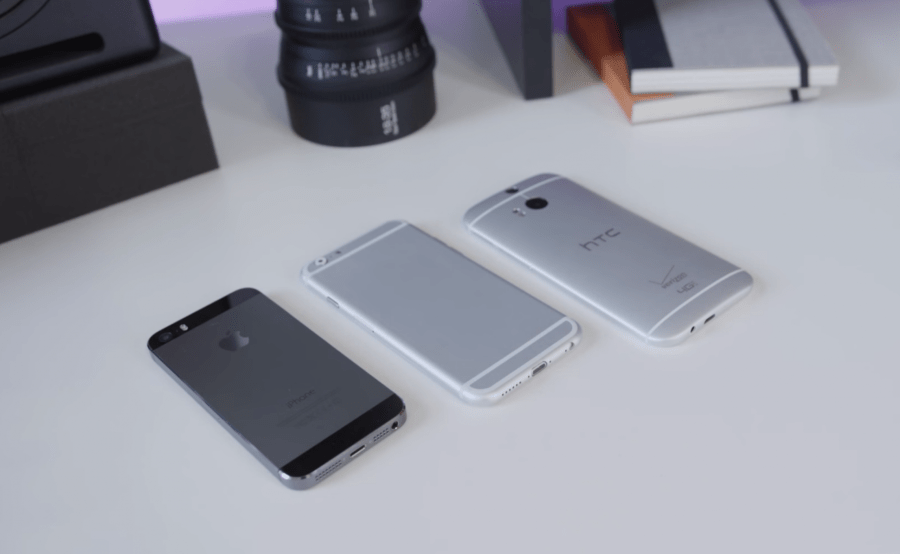
iPhone 6: A Big Screen Is Nice, But The Bigger Battery Is Necessary

The holy grail of better portable consumer electronics has always been the battery, but somehow they never seem to get any better.  This article from Forbes points out that in the new iPhone, available internal real estate along means we will have bigger batteries.  “But aside from the obvious benefits of a bigger screen — better video, more fun gaming, easier reading, et al. — a more subtle benefit comes from merely having a larger phone. Because the other internal components don’t need to grow in size, there is more room for a larger battery inside.”

via iPhone 6: A Big Screen Is Nice, But The Bigger Battery Is Necessary.

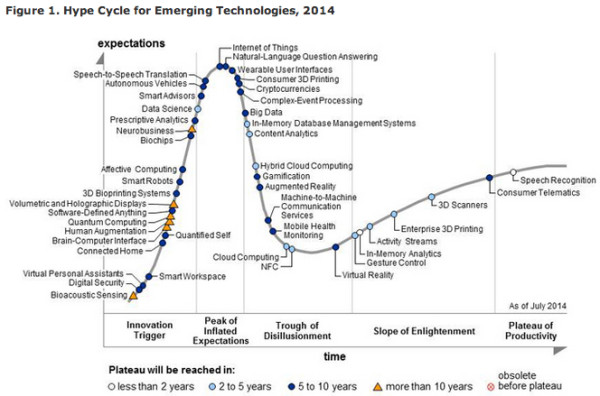
Charting the ‘Hype Cycle’: Internet of Things, Wearables, 3D Printing at the ‘peak of inflated expectations’

Terrific graphic from Geekwire.  Looks like we are at the peak of the Internet of Things – as we are waiting for the iWatch (??)  “The Hype Cycle for Emerging Technologies is the broadest aggregate Gartner Hype Cycle, featuring technologies that are the focus of attention because of particularly high levels of hype, or those that Gartner believes have the potential for significant impact,”

via Charting the ‘Hype Cycle’: Internet of Things, Wearables, 3D Printing at the ‘peak of inflated expectations’ – GeekWire.

On the Internet of Things, your body is the next thing to be networked

The Internet of Things is likely to be bigger than any device – iPad, iPhone – because there is nothing it won’t apply to.  This article discusses one particular wristband and its capabilities, but we are at the very beginning of what will soon be very common.  Our biometric data, passwords, authentications, learning competencies, the lights we want on in our homes and the times the heater should turn on.  It is all going to change dramatically, and soon.  “At a recent demonstration in Toronto, a biomedical researcher slipped on a wristband and waved it at a laptop, watching as the computer recognized him and unlocked itself. Then he handed the same wristband to his research partner, who put it on and tried the same thing—but this time, the laptop didn’t respond.”

via On the Internet of Things, your body is the next thing to be networked.

iStick Is a USB Thumb Drive for the Latest iPhones and iPads


This will be a game changer for many of us.  Especially for iPads, which are used more and more often as a substitute for a laptop – being able to use a memory still will make things much easier.

“…late next month, a small California company plans to introduce an actual iOS-compatible thumb drive called iStick. It’s specifically designed to move files in both directions between computers and iOS devices that use Apple’s current charging and syncing port, which is called the Lightning connector. It also allows you to view or play the files right from the drive itself, so you don’t have to transfer them and take up space on your target device if you’d rather not.”

via iStick Is a USB Thumb Drive for the Latest iPhones and iPads | Re/code.

Customizing Your Tech to Minimize Stress

Does more technology cause more stress, or less?  I could argue that being available and knowing I’m not needed is less stressful than not being available and not knowing.  But it does seem most people perceive tech as a stressful intrusion.  This article from The Big Think sums it up.  “At the end of the day, stress doesn’t come from technology but rather how we approach technology.”

via Customizing Your Tech to Minimize Stress | IdeaFeed | Big Think.

How to learn to play piano with a little help from your iPad

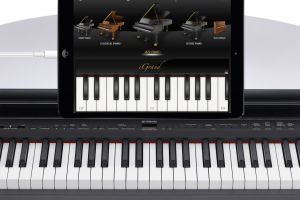
Who would have thought there would come a day where you could really learn to play an instrument without an instructor.  There’ve been YouTube videos and other ways to learn online, but this is a hands on method that looks promising.  From GigaOm.  “There are aspects about learning to play piano where the iPad can help, and there are others where it can hurt. The following will look at both sides and hopefully make learning a bit easier.”

via How to learn to play piano with a little help from your iPad — Tech News and Analysis.

Wearable Computing is Not Calm Technology, Yet

The Big Think discusses Wearables, and the article hit the nail on the head for me.  They are not transparent – they are constant work.  They are “more a flashback of your worst Tamogotchi nightmare.”  Technology really should only require our attention when necessary, and wearables are certainly not what the article calls a “Calm Technology.”   “Wearables only work if you keep wearing them, and studies have found that most people don’t. Half of American adults who own an activity tracker no longer use it, and one third who have owned a wearable product stopped using it within six months. Obviously the reality of wearable computing isn’t as compelling as its promise.”

via Wearable Computing is Not Calm Technology, Yet | Capitally | Big Think.

How the Internet of Things Will Change Business

Ubiquitous technology is here, and it is not confined to computers and smartphones.  Prices of radio chips are falling, and its getting possible and affordable to connect things in every day life.  Sewer pipes, trash cans, HVAC.  Has it gone too far, or are we just beginning?  MIT Technology review sees both sides of the emergence of everyday and workplace Internet of Things.  “The technology industry is preparing for the Internet of things, a type of computing characterized by small, often dumb, usually unseen computers attached to objects. These devices sense and transmit data about the environment or offer new means of controlling it.”

via How the Internet of Things Will Change Business | MIT Technology Review.