IFTTT is one of my favorite services. It is getting particularly interesting as it adds sensor devices to its service. Notice “11 Top IFTTT recipes to Activate Now”, link on the Mashable page. “IFTTT allows apps to communicate with each other through “recipes”. These recipes are simple conditional statements that can sync with your Facebook, Twitter, and more to create some fun automated actions like texting the weather in the mornings and saving your tagged photos to Dropbox.”
Category: Digital Puglishing

I admit, I do get mesmerized by Vines. These are Gizmodos 5 best of the year. “….even though last year’s winners were pretty incredible in their own right, this year’s take it to a whole other level. Apparently, an extra year of six-second shooting practice does a Vine good.”
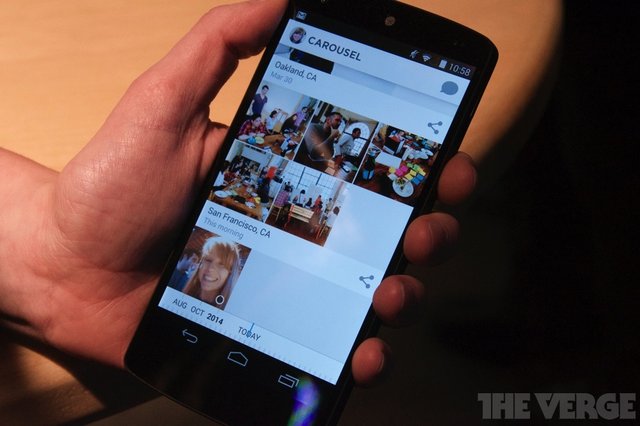
Most people think of Dropbox as, well, Dropbox. Since the acquisition of Mailbox.com, they’ve been adding features. This app, as well as a Mac Mailbox app, look promising if as streamlined and functional as their flagship. “At an event in San Francisco, Mailbox founder Gentry Underwood showed off the service, which organizes photos and videos from your camera roll into an app for Android and iOS. A scroll wheel at the bottom of the app lets you move backward and forward in time with a swipe of the thumb. Dropbox says the app is “one place for all your memories.” All photos stored in the app are backed up to Dropbox.”
via Dropbox unveils Carousel for organizing your photos and videos | The Verge.
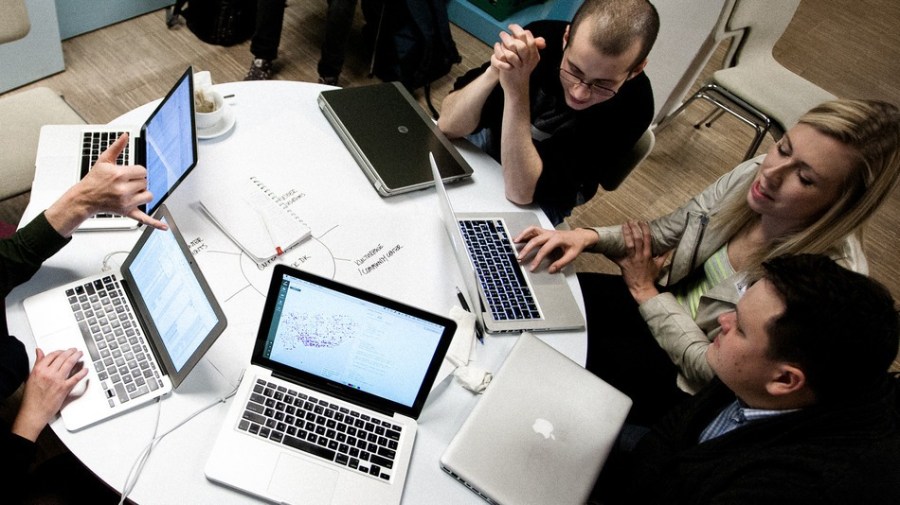
An ideal way for companies to hunt for talent. Hackathons show a candidate in context – how they collaborate and how they generate ideas. This article from Mashable explains in detail. “For those looking to score a job at a hot tech startup or a coveted spot with a tech behemoth like Facebook or Square, the job search scene has an up-and-coming competitor to the traditional career fair: hackathons.”

There is truly a gap. On one hand, we have articles that speak to the shortage of talent we will have in so many necessary industries. Aerospace and many other technological process companies all have people retiring, jobs that are needed, and skills that will be so difficult to replace. On the other hand, we are focused on filling the new tech jobs: “Now a third wave of startups is sprouting up to tackle the dearth of vocational CS training with intense, in-person training. Companies like The Flatiron School, which I recently invested in, and the Turing School, are teaching students in short-term immersion programs. They tend to attract very motivated students, many of them mid-career in non-technical professions, who spend day and night learning coding over short periods of time. After completing their programs, the students have the technical skills employers are looking for, and they are highly marketable. In fact, Flatiron boasts nearly 100 percent job placement.”
via Changing Our Education System One Programmer At A Time | TechCrunch.

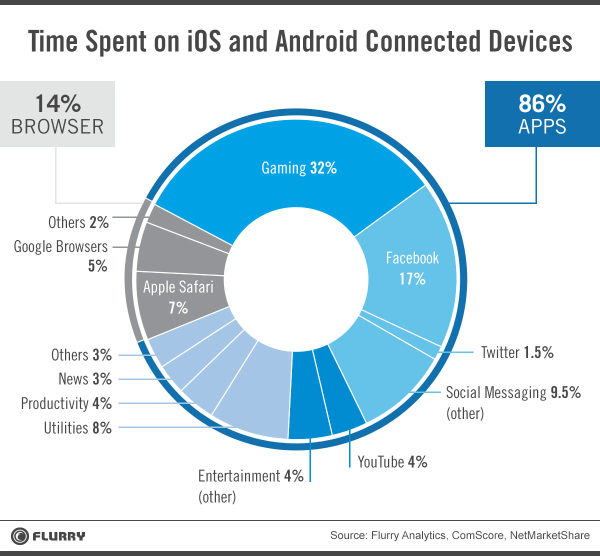
These charts show not only the growth of the mobile web, but how growth of native apps has taken off. Less use of mobile browsers, more apps. Thanks to Austin Hallock’s blog.

Time Magazine tells the story of Gmail’s launch. Until then, most people paid AOL or other ISP for their email accounts. How long was Gmail in Beta? Interesting article. “Google’s email breakthrough was almost three years in the making. But it wasn’t a given that it would reach the public at all”
via How Gmail Happened: The Inside Story of Its Launch 10 Years Ago | TIME.com.
This is a good overview from TechCrunch about the future of Microsoft. They’ve had a number of tries at the B to C market lately, but consumers may not have noticed the strength of their B to B offerings. And it sounds like they might be making some good decisions about the direction of their B to C presence as well. “The future of Microsoft is in selling its software, such as Microsoft Office 365, Microsoft Dynamics CRM and ERP, and Microsoft servers in the Axure cloud to business customers on whatever platform they like. Each of these products is arguably best-of-breed and cloud-based, and has a large customer base. Microsoft indeed has the ability to pivot, and pivot hard, as it did when it switched from pushing MSN to competing with Netscape in the Internet space. And Microsoft is once again not encumbered by antitrust restrictions from aggressively pursuing these markets.”

Everyone, everywhere is addicted to 2048. It’s the number one free game in the Apple iOS store, and seems to be all anyone is talking about. But according to Venturebeat, “The only problem is that it’s a copycat game, as Sirvo, the makers of Threes pointed out in an open letter a couple of days ago. The letter shows the angst of modern creators who are powerless to do much about cloners, iterators, and homages that people might fail to realize are not the real thing.”

This was great news today, and the student who figured this out was really thinking. Now we just have to get rid of the paper used in those offices altogether. “Changing the standard typeface used by federal and state governments could save the United States roughly $370 million a year in ink costs, according to a peer-reviewed study by Suvir Mirchandani. The best part of the story? Mirchandani is just 14 years old.”
via 14-Year-Old Proves U.S. Can Save $370 Million by Changing Fonts.
 Workplace Learning in the Digital Age