Evidently people tend to complain about the same things via Twitter if they are from the same city. “New Yorkers are always complaining about the weather, while San Franciscans tend to moan about the city’s perpetually poor MUNI bus service. That’s not just a stereotype — it turns out there’s hard, Twitter-based evidence for it.”
Category: Tech Software
Sometimes we can see what the future will look like on a bigger scale when we see what big companies are doing. This story of how UPS utilizes dynamic data to calculate best delivery routes is an example. “Take UPS’s On-Road Integrated Optimization and Navigation, or ORION, as an example. The brainchild of Jack Levis, UPS’s director of process management (he worked on it for nearly a decade before the first test implementation in 2008), it uses a variety of data streams — map data, customer information, business protocols, and work rules — to calculate the most streamlined and efficient delivery route … better than any mere mortal ever could.
The system uses so many algorithms — nearly 80 pages of math formulas — that Levis describes it as “something Einstein would have on his blackboard.””
via What UPS Drivers Can Tell Us About the Automated Future of Work | Wired Opinion | Wired.com.

A recent study from the Pew Foundation categorized Twitter conversations, putting different types of discussion into silos. I think some of us fall into different categories at different times. “Researchers concluded that there are roughly six different types of conversational archetypes that take place on Twitter. In other words, most conversations take the form of one of these six general structures: Polarized Crowd, Tight Crowd, Brand Clusters, Community Clusters, Broadcast Network, Support Network.” From Mashable.
via Your Twitter Conversations Fall Into One of These Six Categories.
The Quantified Self seems to be Apple’s newest direction. It’s not really a surprise, as the newest iPhones have a chip that measure our steps and motion, even though few apps take advantage of it. They’ve clearly been thinking about this for some time, and new reports are making the plans take shape. “As we sifted through the reports and rumors, we became encouraged about the level of discourse about Apple’s possible healthcare play. Much of the discussion has centered around Apple’s assembly of a high caliber team of experts with deep experience in medical sensors and patient monitoring technologies, which gave further credence to reports of Apple’s possible introduction of an “iWatch” that would allow users to track health and fitness data generated by sensors embedded in the wearable. Some even raised the possibility that Apple might be interested in developing medical devices, peripherals or accessories for the iPhone.”
I’ve looked for these apps more than once. “If you want to manage them all through your iPhone or iPad, there are a number of podcast apps to consider. We tackled the problem back in 2011, but a lot has changed in the last three years – so here’s our updated shortlist.”
via 9 of the best podcast apps for the iPhone and iPad – The Next Web.
This is from the NYT this morning about Facial Recognition. We’ve been reading about how its application will be location-oriented, in aisles where we are standing to push us specials etc. This is new for me. People most likely to spend money. “Facial recognition technology, already employed by some retail stores to spot and thwart shoplifters, may soon be used to identify and track the freest spenders in the aisles.”
From GigaOm – Who has built the fastest network? The most resilient network? The network with the most room to grow? Gigaom takes a look at how the carriers stack up on LTE given their recent flurry of activity.
via The state of LTE in the U.S.: How the carriers’ 4G networks stack up — Tech News and Analysis.
By the time a topic is “trending” on Twitter, it’s probably old news already. Today in New York City, data-crunching company Dataminr announced a new tool for journalists. Its goal is to seek out news stories before they’re heavily reported.
From Wired.
via New Twitter Tool Finds Hot Topics Before They Trend | Gadget Lab | Wired.com.
Inside.co is cutting “around the world in 80 days” down to 18.This travel startup introduced its portal for $10 travel guides today, which aim to provide a local experience of a new place in just three days.Inside was founded by Andrew Hyde and Brady Becker, two Boulder-based serial entrepreneurs who wanted to combine their love of startups with their love of travel. The result is Inside Travel Guides.
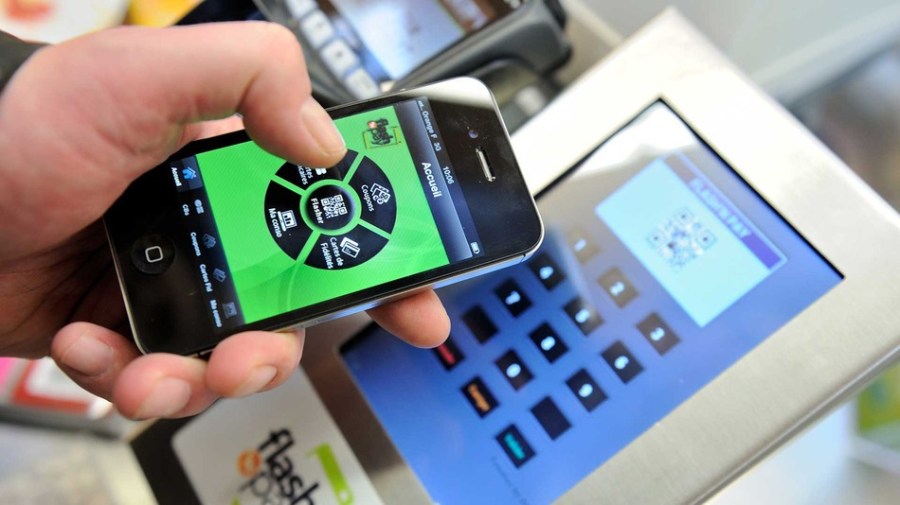
Apple is preparing to expand its presence in the mobile-payment space, according to a new report.
Makes good sense – so many iPhones, so many iTunes accounts already in place.