14-Year-Old Proves U.S. Can Save $370 Million by Changing Fonts

This was great news today, and the student who figured this out was really thinking.  Now we just have to get rid of the paper used in those offices altogether.   “Changing the standard typeface used by federal and state governments could save the United States roughly $370 million a year in ink costs, according to a peer-reviewed study by Suvir Mirchandani. The best part of the story? Mirchandani is just 14 years old.”

via 14-Year-Old Proves U.S. Can Save $370 Million by Changing Fonts.

The API Economy and You

It’s the consumer Internet – that’s what is driving the massive growth of Silicon Valley and all things B to C.  With that comes the need for APIs.  Salesforce.com is a great example of how an open API can drive success.  “Since the time of these early examples, APIs have seen massive growth and adoption. One of the most successful companies to open its API has been Salesforce.com. The company has nearly 3 million applications represented in its third-party app ecosystem, with the majority of its site traffic driven by its API.”

via The API Economy and You.

Twitter Now Lets You Tag Photos And Create Tweet Albums

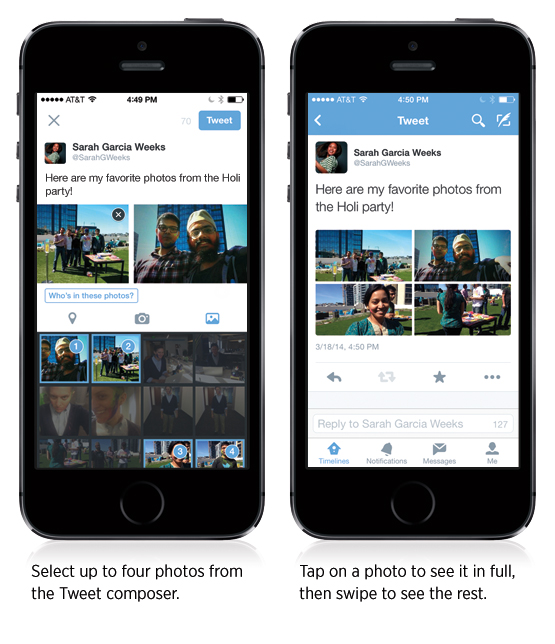
New feature in in Twitter is very similar to Facebook.  My first reaction is that when I tweet, I do it really quickly, even when taking a photo.  I can’t imagine taking the time to tag, etc. but it does seem handy for certain occasions.  Most likely people will send less tweets and save up pictures to send all at once.  “Tagging photos on Twitter works almost exactly as it does on Facebook. When you select a photo, you’re prompted to tap on “Who’s in this photo?” and then type and select the name of the person you want to tag. Users will receive notifications if they’re tagged in a photo; however, if the person sharing the photo doesn’t use the @-mention, the user’s name will appear next to the photo as it does on Facebook. ”

via Twitter Now Lets You Tag Photos And Create Tweet Albums – ReadWrite.

The Brutal Ageism of Silicon Valley

From the Big Think, another article about a currently hot topic, ageism in Silicon Valley.  This is written by Peter Lawler, who quotes Mark Zuckerberg “young people are smarter” and has many good reasons why it just is not so.  What happened to the wisdom that comes with age?  “A very old professor told me a couple of years ago:  “Every year I know more and more, and the students less and less.”  Me too.  I don’t quite agree with the guy who claimed that today’s young are “the dumbest generation,” but they sure aren’t as smart as they think they are.  (Well, it’s likely I’m not as smart as I think I am either.)”

via The Brutal Ageism of Silicon Valley | Rightly Understood | Big Think.

Upgrade your brain: Programming resources for coding newbies

I’m not sure it is avoidable for anyone.  CEOs need to know the basics of coding, and there are so many ways to learn there are no excuses.  TNW shares some ideas.  The go so far as to call it a digital literacy.  “It used to be okay to just be a manager and leave the tech to the geeks, these days, products are being developed at speeds never seen before, sometimes in weeks. The rates of execution, iteration and experimentation (lean) are neck-breaking, and you should be a part of it, hands-on, and not as an orchestrator only.”

via Upgrade your brain: Programming resources for coding newbies – The Next Web.

A Look Back In Techdirt History

I’ve never felt TechDirt got the attention it deserved, but it’s a great resource and this article was a reminder of the “informed” side of the internet we’ve been focusing on for the past 15 years.  This is a recollection since 1999.  “The site had existed for nearly two years before that, but was mainly done as an email newsletter. Back in March of 1999, the word “blog” still didn’t even exist until a few months later (though “weblog” had been around for a little while before that) and didn’t really catch on for a couple years. Anyway, given 15 years of blog posts, I thought it might be fun to look back at what we were writing about five, ten and fifteen years ago.”

via A Look Back In Techdirt History | Techdirt.

How Were You Using the Internet in 1999? Remembering AOL CDs

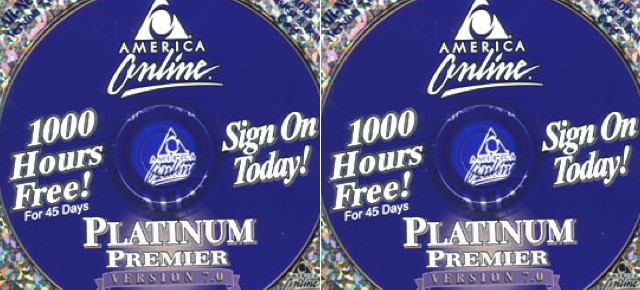
When I saw this article on Gizmodo, I couldn’t help but laugh.  I’m sure there were more AOL CDs printed than any top seller music album in history.  The funniest thing to me is how many people I’ve had to tell – and somewhat recently I might add – that AOL email addresses are free.  As far as I can tell, they never informed their long time loyal users that they could keep their email address and account for free, and still charge their credit cards monthly.  Though I will qualify that and say it is heresay – I only know what people told me and I don’t know for sure.  Interesting article about Internet nostalgia regardless.

“One thousand hours free for 45 days! This, of course, started us all down a road of weird nostalgia, recalling how we used (or misused) the World Wide Web back in the twilight of the 90s. What were you doing on The Internet back then?”

via How Were You Using the Internet in 1999?.

The common elements of good storytelling

What makes a good story? Simple. Emotional. Truthful. Real. Valid. This article from TNW expands, and I think anyone will agree.  “Storytelling is as old as any culture, but probably better preserved as a practice with First-Nations than European culture. It was the primary way of passing along information, long before the written word even existed.”

via The common elements of good storytelling – The Next Web.

Staying Home, Connected to the World

Interesting article from the NYT, discussing the pros and cons of the ways we are now connected to everything with our phones.  The author describes a day in which he does everything, and pays for everything, via his smartphone.  How does that effect chance encounters, small businessmen, opportunities that arise from the people we see every day?  “But in the end, Mr. Gleick said, the pros of our technology-driven lives outweigh the cons. “For every dry cleaner who you’re now cutting yourself off from, you’re potentially capable of being in touch with thousands of people who are physically far away,” he told me.”

via Staying Home, Connected to the World – NYTimes.com.