Rejoice: Tomorrow’s Tech Will Probably Stop Nagging Us | WIRED

Conceptually, the goal has always been to make technology invisible.  To many of us it is, though when we use the phrase “invisible” it means we just don’t notice it.  If we are speaking with somebody on a cell phone, we don’t notice the phone.  We think about the content, what we are saying, and the person we are speaking to.  The phone is still in our hand, unnoticed, but visible (unless the phone isn’t working properly!)

In the new IoT era, the technology will be more embedded, more functional – yet truly invisible.  This story from Wired is very accurate.

“How does one create an environment of “invisible technology”? Start by gaining a more complete understanding of all the facets that enable a product or service to operate. Break down any complexity by mapping each conversation that needs to take place between people and machines for the service to work well.”

via Rejoice: Tomorrow’s Tech Will Probably Stop Nagging Us | WIRED.

Don’t Answer Emails That Lack Questions

Who knows how many emails are in our email boxes each day.  I love this suggestion from 99U.  “Your inbox is cluttered with emails of no consequence, including one of the worst offenders: the email that lacks a question. Kristin Muhlner, CEO of NewBrand Analytics, shares her rule for emails that don’t move projects forward: ignore them.”

via Don’t Answer Emails That Lack Questions – 99U.

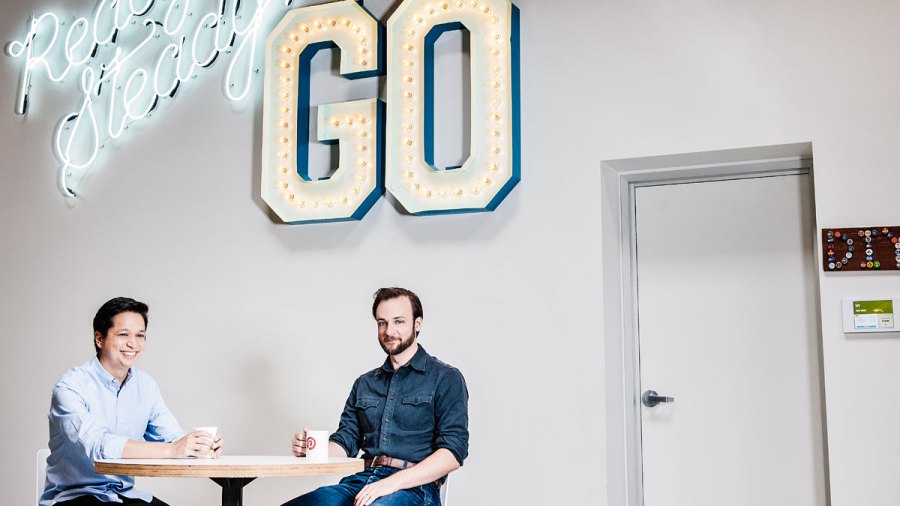
Inside Pinterest: The Coming Ad Colossus That Could Dwarf Twitter And Facebook

An incredible story about Pinterest and its huge user base, where 80% of the users are women.  It’s huge, and the potential for revenue dwarfs that of many other popular social networks.  This is from Forbes.  “A visual social network where people create and share image collections of recipes, hairstyles, baby furniture and just about anything else on their phones or computers, Pinterest isn’t yet five years old, but among women, who make up over 80% of its users, it’s already more popular than Twitter, which has a market capitalization of more than $30 billion.”

via Inside Pinterest: The Coming Ad Colossus That Could Dwarf Twitter And Facebook.

Why Inventors Misjudge How We’ll Abuse Their Creations

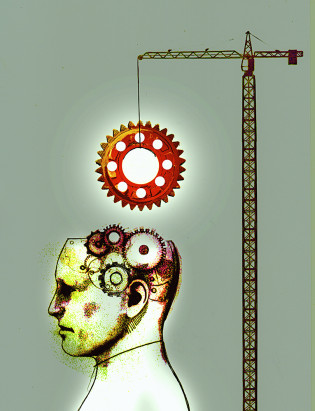
Often entrepreneurs do brilliant things, but suffer from myopia.  They see applications for their products or inventions that are applicable to them, but in fact others may see them entirely differently.  Interesting article from Wired about some of the greatest inventors, and the original purpose of their inventions.  “For understandable reasons, when we tell stories of technological innovation, we tend to focus on insight and even seeming clairvoyance—the people who can see the future before the rest of us. But there’s a flip side to such farsightedness that shows up again and again in the history of innovation: the blind spots, the possibilities that somehow escaped our field of vision but that, in retrospect, seem glaringly obvious.”

via Why Inventors Misjudge How We’ll Abuse Their Creations | WIRED.

Adobe Debuts A Slew Of New Mobile Apps

Adobe has really turned around – super impressive line up of apps that support creativity.  Apple shut them out of iPads with Flash, but their presence will be even greater with even more new tools that synch with Creative Suite.   “Adobe’s new lineup includes apps in the Photoshop and Lightroom family, a new collection of Illustrator mobile software, a brand new Premiere app for using on the iPhone or iPad, and a new family of three apps that work across many of its CC apps to “capture” images, colors and design elements from the real world.”

via Adobe Debuts A Slew Of New Mobile Apps, Including Brush, Shape And Draw | TechCrunch.

The Internet and the Cultural Industries


From MIT Technology Review – the Internet’s influence on the Production and Consumption of Culture.  There hasn’t been a change in basic business models, however culture can now be downloaded and enjoyed in private.  This happened very quickly.  “The Internet has been a disruptive technology for the arts and media, reshaping industries while introducing new ways to organize production and distribution. The Internet’s influence in the cultural industries depends, first, on the extent to which digital substitutes for analog experience are likely to satisfy consumers. Second, on the extent to which producers must maintain competitive profits. And, third, on the ability of incumbent firms to exploit changes inherent in digital production and distribution.”

via The Internet and the Cultural Industries | MIT Technology Review.

New study shows some benefits to telecommuting

Last year, Melissa Mayer made many people question their corporate decisions to allow employees to telecommute, just as the virtual workplace was becoming somewhat common.  It seems the University of Illinois began a study at about that time, to prove that in fact there are many benefits to telecommuting.  “The University of Illinois found that telecommuters make more of an effort to help out their coworkers so-called “corporate citizenship”, and in some cases they can also be more productive.”  Article is from VentureBeat.

via New study shows some benefits to telecommuting | VentureBeat | Business | by Gregory Ferenstein.

Uber Adding 50,000 New “Driver Jobs” a Month, Up From 20,000 in May

I’m always in awe when I use Uber.  Though many think of it as a service that disrupts cabs, I think the majority of people use it instead of alternatives – not cabs.  When I speak to Uber drivers they tell me stories of picking up teens to take them from school, making deliveries, being the “designated driver” so nobody else has to, and of course driving people from here to there.  People USE Uber, not as a default (oh, I’ll take a cab) but as an integrated part of their life. The CEO of Uber, Travis Kalanick, recently spoke at the Techcrunch Disrupt conference, told the audience that “Driver jobs” are an Uber-created metric used to quantify new drivers on its platforms. These jobs are global — Uber is available in 45 countries — and while they aren’t jobs in the traditional sense, they do signify opportunities for people to make money by picking up passengers through the app.”

via Uber Adding 50,000 New “Driver Jobs” a Month, Up From 20,000 in May | Re/code.

Technology conundrum: How to help seniors age in place without creeping them out

Fantastic article about applications for IoT with the aging population.  GigaOm really gets it right.

“Aging in place is a killer application area for the internet of things. If you or your grandmother can control her lights and coffee maker from a smartphone or easy to use tablet, that’s great. It’s even better if you can be discreetly apprised of her level of activity and alerted if she doesn’t take her pills on time.”

via Technology conundrum: How to help seniors age in place without creeping them out — Tech News and Analysis.