Changing Our Education System One Programmer At A Time

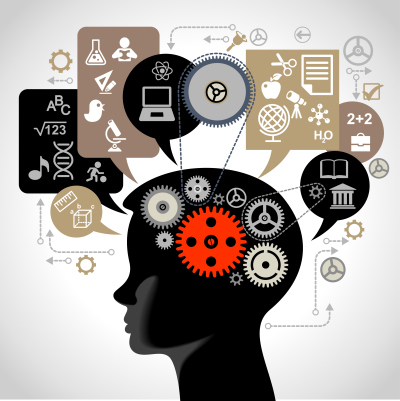
There is truly a gap.  On one hand, we have articles that speak to the shortage of talent we will have in so many necessary industries.  Aerospace and many other technological process companies all have people retiring, jobs that are needed, and skills that will be so difficult to replace.  On the other hand, we are focused on filling the new tech jobs:  “Now a third wave of startups is sprouting up to tackle the dearth of vocational CS training with intense, in-person training. Companies like The Flatiron School, which I recently invested in, and the Turing School, are teaching students in short-term immersion programs. They tend to attract very motivated students, many of them mid-career in non-technical professions, who spend day and night learning coding over short periods of time. After completing their programs, the students have the technical skills employers are looking for, and they are highly marketable. In fact, Flatiron boasts nearly 100 percent job placement.”

via Changing Our Education System One Programmer At A Time | TechCrunch.

‘We’re Never Truly Done’: 10 Employees Give Insight on Startup Culture

It’s true, you’re never really done when you’re working for a startup, or an entrepreneur.  Startup culture has never been bigger.  It is meaningful, makes a big difference, and is a fantastic learning experience.  It also comes with stresses.  They are never “done for the day.”   “For some, the perks of ping pong tables, free snacks and flexible hours are enough to convince early startup hires to sign on the dotted line. For others, the potential to make an impact on a growing business and have a hand in shaping an industry is the main allure. With new and promising startups popping up in locations everywhere from Silicon Valley and New York City to burgeoning tech hubs like Boston and Miami, it’s clear that startup culture has its advantages — and its hardships.”

via ‘We’re Never Truly Done’: 10 Employees Give Insight on Startup Culture.

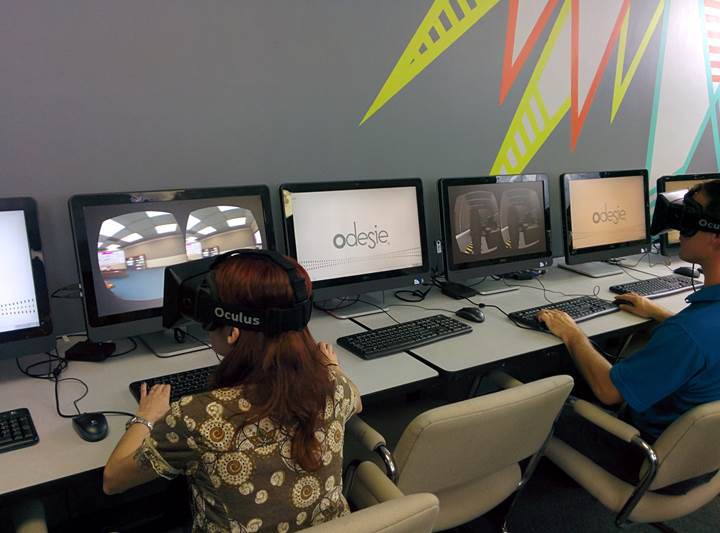
One Company Betting On Oculus Rift As The Platform For VR HR Training

This makes good sense to me – creating an immersive environment is ideal for workplace learning.  Using virtual reality is definitely better than Second Life, which was going to be the way simulations and learning took place.  We ended up flying around….Article is from TechCrunch.  “This is another story today where I had to check to make sure it wasn’t an early April Fools’ joke, but it isn’t, I’m assured by TTS’ John Hoover. The company really is building “immersive learning environments” that combine “virtual worlds, instructor-led training, site-specific training, custom elearning and simulation to effectively train your workforce,” as TTS CEO Lou Rivera explains in an emailed release.”

via One Company Betting On Oculus Rift As The Platform For VR HR Training | TechCrunch.

Battle of the Dash: Tech Companies Try to Get Their Apps in a Row

From the New York Times.  This car app idea is scary.  I hope they will all function with voice commands.  “Will Apple’s CarPlay dominate the dashboards of future cars? Is Ford planning to kick Microsoft out of its Sync system? Are Audi and General Motors going for Google? Or does QNX, a dark horse whose software is already in tens of millions of vehicles, have the cards to trump other high-tech companies?”

via Battle of the Dash: Tech Companies Try to Get Their Apps in a Row – NYTimes.com.

The Brutal Ageism of Silicon Valley

From the Big Think, another article about a currently hot topic, ageism in Silicon Valley.  This is written by Peter Lawler, who quotes Mark Zuckerberg “young people are smarter” and has many good reasons why it just is not so.  What happened to the wisdom that comes with age?  “A very old professor told me a couple of years ago:  “Every year I know more and more, and the students less and less.”  Me too.  I don’t quite agree with the guy who claimed that today’s young are “the dumbest generation,” but they sure aren’t as smart as they think they are.  (Well, it’s likely I’m not as smart as I think I am either.)”

via The Brutal Ageism of Silicon Valley | Rightly Understood | Big Think.

Staying Home, Connected to the World

Interesting article from the NYT, discussing the pros and cons of the ways we are now connected to everything with our phones.  The author describes a day in which he does everything, and pays for everything, via his smartphone.  How does that effect chance encounters, small businessmen, opportunities that arise from the people we see every day?  “But in the end, Mr. Gleick said, the pros of our technology-driven lives outweigh the cons. “For every dry cleaner who you’re now cutting yourself off from, you’re potentially capable of being in touch with thousands of people who are physically far away,” he told me.”

via Staying Home, Connected to the World – NYTimes.com.

Delivery dreams: How I’d build a better Amazon Prime

I always thought Amazon Prime was a fantastic deal, so wasn’t surprised when they announced the new price increase (after so many years.)  The author of this article lives in a place where there are options, but unless you live live in one of the areas she mentions these interesting options really aren’t available.  They could be in the not-to-distant future though.  “The Amazon Prime price hike has me thinking about what I’d really like to see from the service. Think streaming sports, personal shoppers and never having to go to the post office again.”

via Delivery dreams: How I’d build a better Amazon Prime — Tech News and Analysis.

MIT Technology Review’s List of 50 Smartest Companies for 2014

This is an annual list of MIT Tech Review Smartest Companies.  Not the ones we see frequently, but companies that have the potential for changing lives in  big way.  “We didn’t count patents or PhDs; instead, we asked whether a company had made strides in the past year that will define its field. The biggest of these strides happened at Illumina, which is driving down the price of DNA sequencing to levels that will change the practice of medicine. We also found dramatic developments on the Web, in batteries, and even in agricultural technologies.

Familiar names such as Apple and Facebook aren’t on this list because reputation doesn’t matter. We’re highlighting where important innovations are happening right now.”

via MIT Technology Review’s List of 50 Smartest Companies for 2014 | MIT Technology Review.

What UPS Drivers Can Tell Us About the Automated Future of Work

Sometimes we can see what the future will look like on a bigger scale when we see what big companies are doing.  This story of how UPS utilizes dynamic data to calculate best delivery routes is an example.  “Take UPS’s On-Road Integrated Optimization and Navigation, or ORION, as an example. The brainchild of Jack Levis, UPS’s director of process management (he worked on it for nearly a decade before the first test implementation in 2008), it uses a variety of data streams — map data, customer information, business protocols, and work rules — to calculate the most streamlined and efficient delivery route … better than any mere mortal ever could.

The system uses so many algorithms — nearly 80 pages of math formulas — that Levis describes it as “something Einstein would have on his blackboard.””

via What UPS Drivers Can Tell Us About the Automated Future of Work | Wired Opinion | Wired.com.