This Woman Invented a Way to Run 30 Lab Tests on Only One Drop of Blood

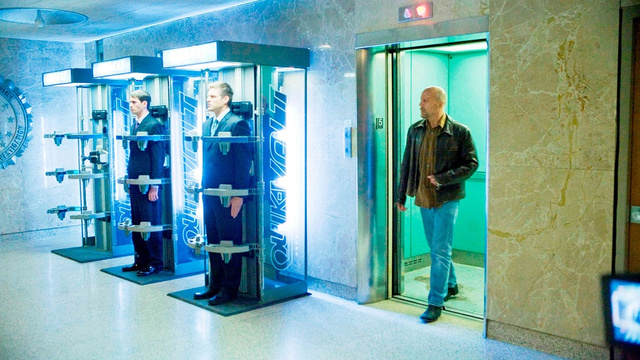
Incredible – Elizabeth Holmes dropped out of Stanford and literally re-invented phlebotomy.  “Instead of vials of blood—one for every test needed—Theranos requires only a pinprick and a drop of blood. With that they can perform hundreds of tests, from standard cholesterol checks to sophisticated genetic analyses. The results are faster, more accurate, and far cheaper than conventional methods. The implications are mind-blowing.”

via This Woman Invented a Way to Run 30 Lab Tests on Only One Drop of Blood – Wired Science.

In Apple’s healthcare play, will BYOD = Bring Your Own Data?

The Quantified Self seems to be Apple’s newest direction.  It’s not really a surprise, as the newest iPhones have a chip that measure our steps and motion, even though few apps take advantage of it.  They’ve clearly been thinking about this for some time, and new reports are making the plans take shape.  “As we sifted through the reports and rumors, we became encouraged about the level of discourse about Apple’s possible healthcare play. Much of the discussion has centered around Apple’s assembly of a high caliber team of experts with deep experience in medical sensors and patient monitoring technologies, which gave further credence to reports of Apple’s possible introduction of an “iWatch” that would allow users to track health and fitness data generated by sensors embedded in the wearable. Some even raised the possibility that Apple might be interested in developing medical devices, peripherals or accessories for the iPhone.”

via In Apple’s healthcare play, will BYOD = Bring Your Own Data? | VentureBeat | Health | by Mark McAndrew, Taft Stettinius & Hollister LLP.

You can’t speculate about technology without speculating about society

With such extreme technological change, we can’t guess anymore.  Not only that, when something new happens, or when there is a new technology, there is not always horizontal adoptions.  This article from Gizmodo makes a very good point.  “Tech changes society, but society shapes tech. That is, social change and technological change go hand in hand, but neither one drives the other.”

via You can’t speculate about technology without speculating about society.

Intel’s Sharp-Eyed Social Scientist

From the NYT, and article that talks about an anthropologist on Intel’s team who researches how we use technology and electronics in our lives – helping them visualize aspirations that take them beyond being a chipmaker.  “Dr. Bell’s title at Intel, the world’s largest producer of semiconductors, is director of user experience research at Intel Labs, the company’s research arm. She runs a skunk works of some 100 social scientists and designers who travel the globe, observing how people use technology in their homes and in public. The team’s findings help inform the company’s product development process, and are also often shared with the laptop makers, automakers and other companies that embed Intel processors in their goods.”

via Intel’s Sharp-Eyed Social Scientist – NYTimes.com.

Jawbone Is Now the Startup Apple Should Fear Most

My first “Jawbone” was a bluetooth headset, and Wired is right in this article that discusses how they don’t just perform a function – they redefine the entire gadget.  “Jawbone is ascending into the top echelon of tech startups, joining the likes of Uber, Dropbox, and Square. But unlike these other rising stars, which are redefining digital services, Jawbone is redefining our gadgets themselves.”

via Jawbone Is Now the Startup Apple Should Fear Most | Wired Business | Wired.com.

What Music Does to Your Brain While You Work

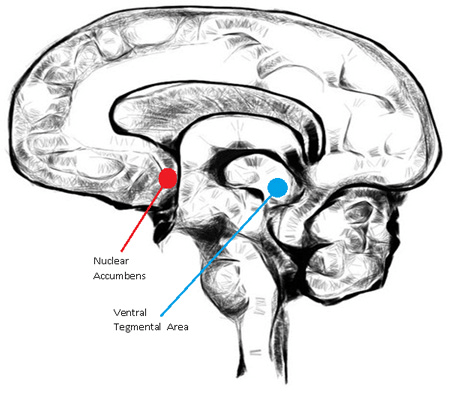
A generation of adults who don’t know life without earbuds.  Surprised there has not been more written about the phenomenon.  This is about perception of music (or chemistry of it.)    “When you listen to music, a part of your brain called the nucleus accumbens activates. This triggers the release of the ‘pleasure chemical’ dopamine, that lives in a group of neurons in your brain called the Ventral Tegmental Area (VTA):

via What Music Does to Your Brain While You Work.

Stephen Hawking declares: ‘There are no black holes’

“…now, in a new paper called “Information Preservation and Weather Forecasting for Black Holes,” Stephen Hawking has cast the cat among the black, holey pigeons and caused a scattering of incomprehension.

His precise words were: “The absence of event horizons mean that there are no black holes — in the sense of regimes from which light can’t escape to infinity.”

Pretty amazing.

via Stephen Hawking declares: ‘There are no black holes’ | Technically Incorrect – CNET News.

Have Wearables Gone Wild? Questioning the Quantified Life.

“….for all the chatter of the “quantified self,” few on stage, in the hallways in between panels comparing rubber bracelets and over dinner and cocktails could rationally explain  how all this  data could be used to improve our lives.”

Interesting article about a question many of us ask.   It’s easy to understand how some of the data we’re collecting is useful, especially to us personally.  But all of it, collectively?

via Have Wearables Gone Wild? Questioning the Quantified Life. | Re/code.

Google and Amazon Hired These Architects to Invent the Future of Work

“Thanks to advances in fields such as neuroscience, psychology, and anthropology and a massive increase in cheap computing power, says NBBJ computational design specialist Andrew Heumann, architects can now do more than just guess how people will move within projects they haven’t yet built. They can trace every possible path of movement, creating complete models of how a building will work (see video above).”

via Google and Amazon Hired These Architects to Invent the Future of Work | Wired Business | Wired.com.

The wrong words: how the FCC lost net neutrality and could kill the internet

From The Verge.

The wrong words.

That was the overwhelming message delivered to the FCC by the DC Circuit yesterday when it ruled to vacate the agency’s net neutrality rules. The FCC had tried to impose so-called “common carrier” regulations on broadband providers without officially classifying them as utilities subject to those types of rules, and the court rejected that sleight of hand. Most observers saw the decision coming months, if not years, ago; Cardozo Law School’s Susan Crawford called the FCC’s position a “house of cards.”

via The wrong words: how the FCC lost net neutrality and could kill the internet | The Verge.